Kamala Sohonie: Biography, Age, Career, Discoveries, Family & Legacy

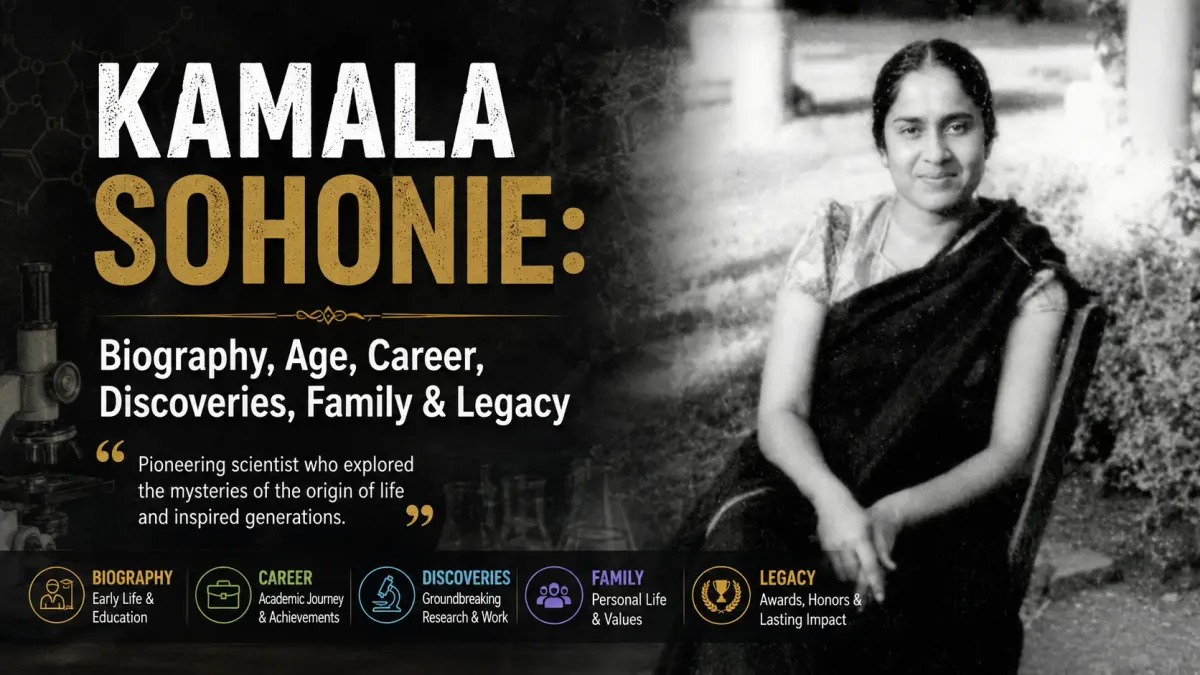
Long before "women in STEM" became a rallying cry, one woman from a small family of chemists in Indore had already knocked down the door herself — quite literally walking into the office of a Nobel laureate to demand a seat at the research table he insisted was for men only. That woman was Kamala Sohonie, and by the time her story ends, she isn't just a footnote in Indian science history — she is its opening chapter for every woman who came after her.
Kamala Sohonie was an Indian biochemist who, in 1939, became the first Indian woman to receive a PhD in a scientific discipline. Her admission into the Indian Institute of Science (IISc) in Bengaluru, secured only after she pushed back against outright institutional rejection, is widely credited with opening the doors of that institution to women for the first time in its history. Beyond this historic first, Sohonie built a career devoted to a deeply practical question: how could science help feed a malnourished nation? Her research into vitamins, pulses, rice, and a humble palm-based drink called Neera went on to improve the health of some of India's poorest communities — a legacy that still resonates in Indian nutrition science today.
This article traces her life from her early years in a household full of chemists, through her battle to be taken seriously as a scientist, her record-breaking PhD at Cambridge, her decades of nutrition research in India, and the recognition — including a 2023 Google Doodle — that finally brought her name back into public memory.
Quick Facts: Kamala Sohonie Infobox
| Field | Information |
|---|---|
| Full Name | Kamala Sohonie (née Bhagvat) |
| Nickname | India's First Lady of Science |
| Profession | Biochemist, Academic, Researcher |
| Famous For | First Indian woman to receive a PhD in a scientific discipline (1939); discovery of Cytochrome C in plant cells; nutritional research on Neera |
| Date of Birth | 18 June 1911 (some sources list 1912; Wikipedia and most recent scholarship confirm 1911) |
| Age at Death | 87 years |
| Birthplace | Indore, Central India Agency (present-day Madhya Pradesh), India |
| Nationality | Indian |
| Religion | Hindu (specific denomination not publicly documented — noted for transparency) |
| Zodiac Sign | Gemini |
| Height | Not publicly documented |
| Weight | Not publicly documented |
| Eye Color | Not publicly documented |
| Hair Color | Black (as seen in historical photographs) |
| Education | BSc in Chemistry and Physics; PhD in Biochemistry |
| School | Not publicly documented |
| College/University | Bombay University (BSc); Indian Institute of Science, Bengaluru (research fellow); Newnham College, University of Cambridge (PhD) |
| Marital Status | Married (widowed before her death) |
| Boyfriend/Girlfriend/Partner | Not applicable — no dating history publicly documented |
| Spouse | M.V. Sohonie (Madhav Sohonie), an actuary, married in 1947 |
| Children | Two sons, Anil Sohonie and Jayant Sohonie |
| Parents | Father: Narayanrao Bhagvat (chemist); Mother: name not widely documented |
| Siblings | Uncle Madhavrao Bhagvat was also a noted chemist (direct sibling details not publicly documented) |
| Net Worth | Not applicable — Sohonie was an academic researcher, not a person whose net worth was publicly tracked |
| Monthly Income | Not publicly documented |
| Hobbies | Reading, writing on consumer awareness, science communication |
| Current Residence | N/A (passed away in 1998; resided in Mumbai for most of her career) |
| Languages Known | Marathi, English, Hindi |
| Official Website | None |
| Social Media Profiles | None (Sohonie passed away before the social media era) |
Early Life and Background
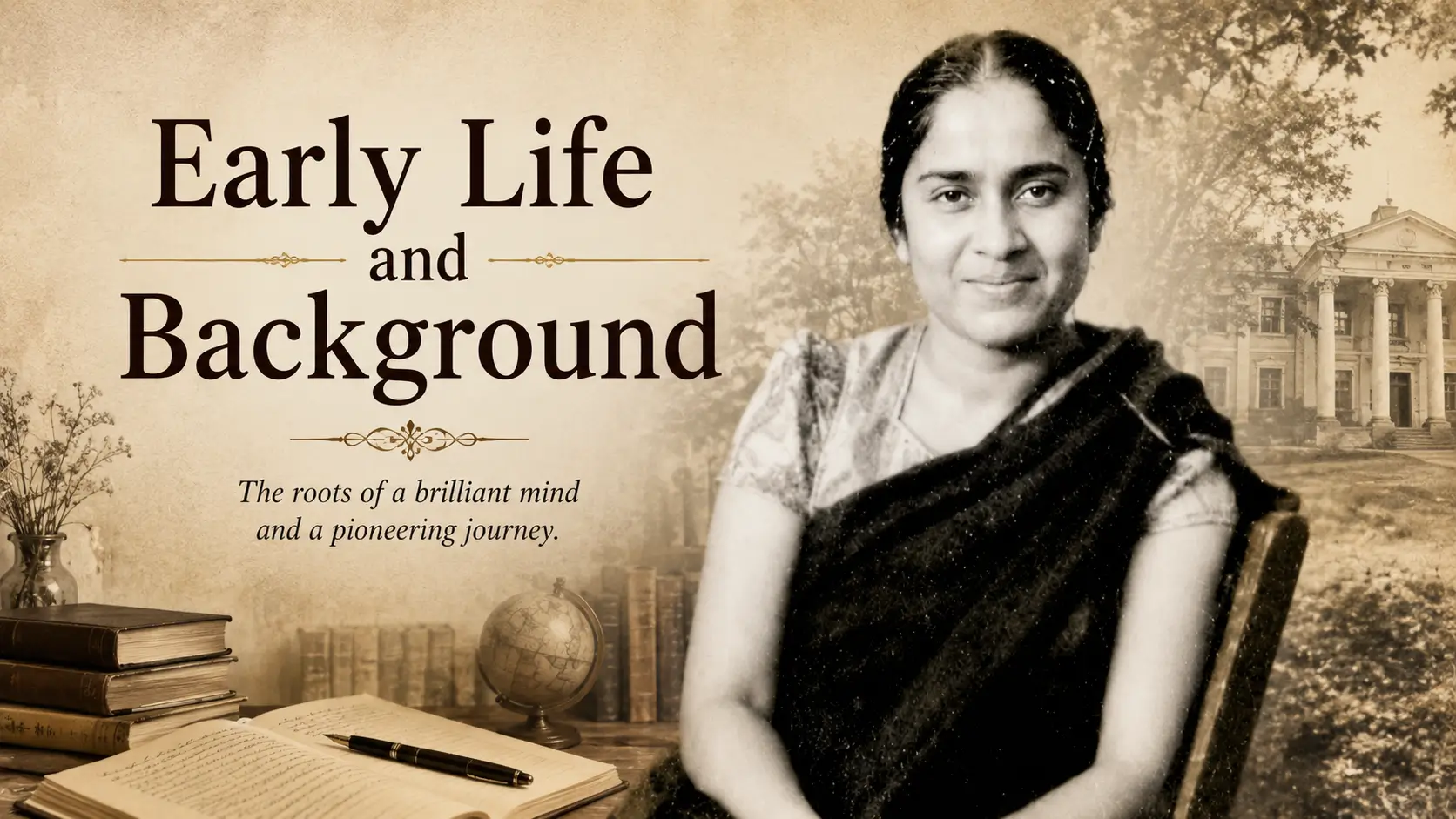
Kamala Sohonie was born on 18 June 1911 in Indore, now in Madhya Pradesh, India. She grew up in a household where scientific inquiry was practically the family business. Her father, Narayanarao Bhagvat, and her uncle, Madhavrao Bhagvat, were both chemists who had studied at the erstwhile Tata Institute of Sciences in Bengaluru, the institution that would later become the Indian Institute of Science (IISc) — the very place where Kamala herself would go on to make history.
Growing up surrounded by chemistry apparatus, laboratory talk, and a family tradition of scientific achievement gave young Kamala an early and unusual comfort with the idea of a woman pursuing science seriously, at a time when this was almost unheard of for Indian women. In the 1910s and 1920s, when Kamala was a child, formal higher education for girls in India was still rare, and careers in laboratory science rarer still. Yet in the Bhagvat household, science wasn't treated as an exclusively male pursuit — it was simply the family's calling, and Kamala absorbed that spirit early.
She showed academic promise from a young age, consistently excelling in her studies. This diligence would carry her into a Bachelor of Science program and eventually to the top of her graduating class — an achievement that set the stage for the far bigger battles she would soon have to fight, not against difficult science, but against people who doubted a woman could do it at all.
Transparency note: Detailed accounts of Sohonie's early childhood — such as specific personality anecdotes, schoolteachers, or early interests outside science — are not extensively documented in publicly available sources, likely because detailed personal biographies of Indian women scientists from this era were rarely recorded until decades later.
It is worth pausing on just how unusual Kamala's early environment really was. In colonial India of the 1910s and 1920s, most girls from even reasonably well-off families were steered toward domestic education, if they received formal schooling at all. Higher education, and certainly laboratory science, was treated as almost exclusively a male domain — a mindset that would follow Kamala right up to the doors of some of the country's most prestigious institutions. What made the Bhagvat household different was not wealth or social status alone, but the simple, repeated example of two men in the family — her father and her uncle — who had built careers around chemistry at a time when that itself was a novel achievement for Indians under British rule.
This meant that by the time Kamala was old enough to think seriously about her own future, the question in her mind was less "can a woman do science?" and more "which branch of science should I pursue?" That subtle but crucial difference in mindset — inherited from her family rather than from the wider society around her — would prove essential in giving her the confidence to challenge gatekeepers who tried to tell her otherwise. It is a reminder that representation, even within a single household, can be enough to change the trajectory of a life.
Education
Following in her father's and uncle's footsteps, Kamala enrolled at Bombay University (also referred to as Mumbai University) to study for her Bachelor of Science degree, majoring in Chemistry as her principal subject with Physics as a subsidiary. She proved to be an exceptional student, graduating in 1933 at the top of her class — a distinction that would have made her a natural candidate for any postgraduate research program in the country.
That confidence, however, ran straight into a wall. When Kamala applied for a research fellowship at the Indian Institute of Science (IISc) in Bengaluru — then headed by the Nobel Prize-winning physicist Sir C.V. Raman — her application was rejected outright. The institute's position, as later recounted by Sohonie herself, was that women were not considered capable enough for serious scientific research. Rather than accept the decision, Kamala travelled to Bengaluru and confronted Raman directly, insisting on being heard.
Her persistence paid off, though not without conditions that would be unthinkable today. She was granted admission to the IISc as its first woman student, on the condition that she remain on probation during her first year of research. According to multiple accounts, the terms were even stricter: she would not be treated as a "regular" student, her work would only be formally recognised once Raman personally reviewed and approved it, and she was expected to avoid being a "distraction" to her male classmates. Sohonie accepted every condition — she simply wanted the chance to work.
She more than met the challenge. Her research performance at IISc was strong enough that Raman, initially her fiercest gatekeeper, eventually relented — not only recognising her work but going on to admit a small number of women into the institute each year afterward. In doing so, Kamala's single act of persistence reshaped IISc's policy on women in research for generations.
Her excellence at IISc opened the next, far more prestigious, door: a scholarship to study at the University of Cambridge in England, which she took up in the late 1930s. At Cambridge's Newnham College, working within the Sir Frederick Gowland Hopkins laboratory, she conducted her doctoral research in biochemistry under scientists including Dr. Derek Richter and Dr. Robin Hill, focusing on enzymes present in plant tissue — most notably on a protein called Cytochrome C, which plays a central role in how living cells generate energy.
What happened next became one of the most remarkable academic feats in Indian scientific history: she completed her PhD thesis in just 14 months, submitting a concise, powerfully focused body of work that ran to only around 40 pages. In 1939, she was awarded her doctorate, formally making her the first Indian woman to earn a PhD in a scientific discipline — a milestone she had chased since the moment Raman first tried to turn her away.
Career Journey
From Rejection to Recognition
Kamala Sohonie's career journey is, in many ways, a story told in two acts: the fight to be allowed into science, and then decades of quietly transformative research once she was inside it.
Despite receiving attractive offers from pharmaceutical companies in the United States after completing her PhD, Sohonie chose to return home to India in 1939. As an admirer of Mahatma Gandhi and the nationalist movement, she wanted her scientific training to serve her own country rather than build a career abroad. It was a decision that shaped everything that followed — she would spend her entire working life applying biochemistry to distinctly Indian problems, particularly malnutrition among the country's poorest citizens.
Early Postings in India
On her return, Sohonie was appointed Professor and Head of the Department of Biochemistry at Lady Hardinge Medical College in New Delhi. From there, she moved to the Nutrition Research Laboratory in Coonoor, where she served as Assistant Director, focusing her research on the effects of vitamins on the human body — early groundwork for the nutrition-focused research that would define the rest of her career.
Marriage, Mumbai, and the Royal Institute of Science
In 1947 — the same year India gained independence — Kamala married M.V. Sohonie, an actuary by profession, and relocated to Mumbai. The Government of Maharashtra had recently opened a new Biochemistry Department at the (Royal) Institute of Science in Bombay, and Kamala applied for and secured the position of Professor of Biochemistry there.
At the Institute of Science, she and her students carried out detailed biochemical studies of the nutritive value of three major categories of food consumed heavily by India's rural and economically disadvantaged population: pulses, paddy (rice), and other staple crops. This work provided some of the earliest scientifically grounded evidence about how these everyday foods contributed — or failed to contribute — to the nutritional needs of ordinary Indians.
The Neera Breakthrough
Perhaps Sohonie's most publicly celebrated contribution came from an unexpected source: palm sap. At the suggestion of India's first President, Dr. Rajendra Prasad, Sohonie turned her attention to Neera — a sweet, nutrient-rich sap extracted from the inflorescence of toddy palm trees. Her research found that Neera was a rich natural source of Vitamin A, Vitamin C, and iron, and — crucially — that these nutrients survived even when the sap was concentrated into jaggery or molasses for storage and distribution.
Over the following years, Sohonie and her students studied the effect of introducing Neera into the diets of malnourished tribal adolescents and pregnant women. The results showed measurable improvements in health outcomes among these vulnerable groups, offering a low-cost, accessible way to fight malnutrition using a resource that was already abundant in many parts of rural India. This body of work earned her the prestigious Rashtrapati Award (President's Award) in recognition of its impact.
Becoming Director — After a Four-Year Wait
Sohonie's scientific and administrative capabilities eventually earned her the top position at the Institute of Science — Director. However, multiple biographical accounts note that her appointment to this role was delayed by around four years, a delay widely attributed to lingering gender bias within India's scientific establishment, even after she had already proven herself as a formidable researcher and educator. When she finally did assume the directorship, she became the first woman to lead the institution — now known as the Institute of Science, Mumbai. Her Cambridge mentor, Dr. Derek Richter, is said to have remarked that she had made history by becoming the first woman to direct such a large scientific institution.
Later Career and Public Service
Beyond her laboratory and academic work, Sohonie contributed her expertise to practical, real-world problems — including advising the Aarey Milk Project factory in Bombay on preventing milk curdling, a valuable application of biochemistry to India's dairy industry.
In her later years, Sohonie shifted some of her energy toward consumer rights advocacy. She became an active member of the Consumer Guidance Society of India (CGSI) — India's first consumer rights organisation, founded by a group of nine women in 1966 — and was elected its President for the 1982–83 term. She wrote extensively on consumer safety for the organisation's magazine, Keemat, applying her scientific rigor to protecting ordinary Indian consumers from fraud and unsafe products.
Social Media Presence
Kamala Sohonie passed away in 1998, several years before the rise of social media platforms such as Facebook, Twitter (X), Instagram, or YouTube. As a result, she has no personal social media accounts, official pages, or verified profiles.
That said, her legacy has found a strong digital afterlife. Her story is widely shared across science communication accounts, women-in-STEM initiatives, and educational pages on platforms like Instagram, X (formerly Twitter), and YouTube — particularly around her birth anniversary on 18 June each year, and especially following Google's decision to honour her with a Doodle in 2023.
| Platform | Official Account | Followers/Engagement |
|---|---|---|
| None (posthumous tributes only) | N/A | |
| YouTube | None (documentary and educational features exist, not an official channel) | N/A |
| None | N/A | |
| Twitter/X | None (widely discussed via hashtags like #WomenInSTEM and #GoogleDoodle) | N/A |
| Official Website | None | N/A |
Physical Appearance
Detailed, verified information about Kamala Sohonie's height, weight, or specific physical measurements is not available in public biographical records — unsurprising for a research scientist from an era when such personal details about academics, particularly women in science, were rarely documented or considered newsworthy.
What historical photographs and written accounts do convey is a woman whose public image was defined not by fashion or physical presentation but by quiet, unshakeable determination. She is typically described and pictured in simple, traditional Indian attire befitting an academic of her era — a look that matched her no-nonsense, work-first approach to life. Her public image was built entirely around her intellect, scientific rigor, and refusal to back down in the face of institutional discrimination, rather than any curated personal style.
Transparency note: No verified figures for height, weight, eye colour, or other physical statistics exist in reputable sources, so this section intentionally avoids fabricated details.
Net Worth
Kamala Sohonie was an academic scientist and researcher, not a public figure whose income, assets, or net worth was ever tracked or publicly estimated — a category that simply did not apply to Indian research professors of her generation. She earned her income through her professorships, first at Lady Hardinge Medical College and the Nutrition Research Laboratory in Coonoor, and later as Professor and eventually Director at the Institute of Science, Bombay.
| Income Source | Details |
|---|---|
| Primary Income | Academic salary as Professor/Director at government-affiliated research institutions |
| Awards & Honours | Rashtrapati Award (non-monetary prestige recognition) |
| Business Ventures | None documented |
| Investments | Not publicly documented |
| Endorsements | None (not applicable to her era or profession) |
| Estimated Net Worth | Not applicable / not publicly tracked |
Unlike modern celebrities or influencers, Sohonie's "wealth" is best measured in scientific and social impact rather than financial terms — a legacy of improved nutrition science and institutional access for women that has proven far more enduring than any monetary figure could capture.
Family and Relationships
Parents and Upbringing
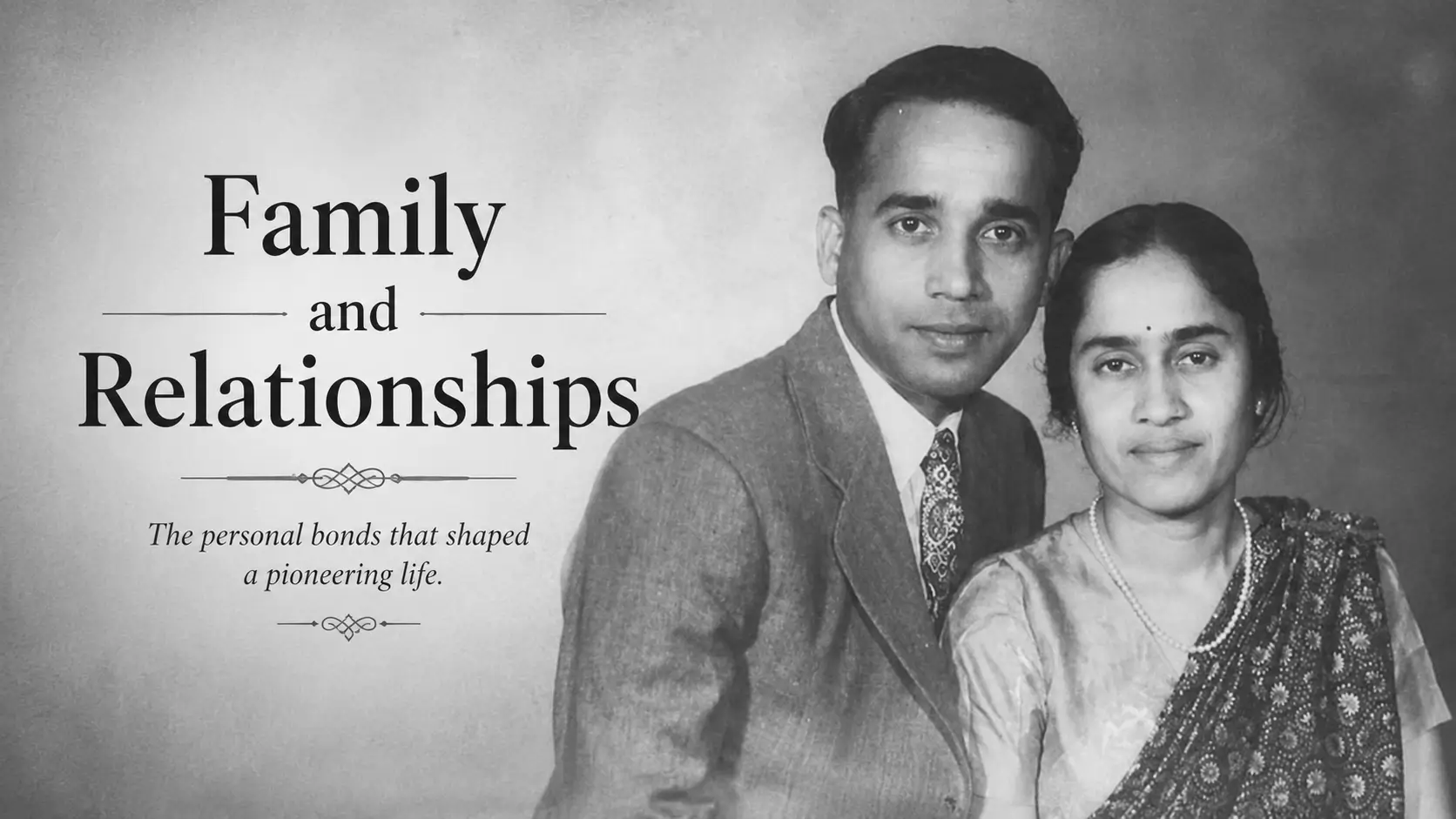
Kamala was born to Narayanrao Bhagvat, a professionally trained chemist, in Indore. Her uncle, Madhavrao Bhagvat, was also a chemist, and both men were alumni of the institution that would later become the Indian Institute of Science. This scientific pedigree gave Kamala early exposure to laboratory thinking and an unusual (for the time) belief that a woman in her family could and should pursue a serious scientific career.
Marriage
In 1947, Kamala married M.V. Sohonie (also referred to as Madhav Sohonie), who worked as an actuary. The marriage led her to relocate from South India to Mumbai, where she would spend the rest of her career at the Institute of Science. Unlike many women of her era who were expected to give up professional ambitions after marriage, Sohonie continued — and in fact expanded — her scientific career after her wedding, going on to become Director of a major research institute.
Children
Kamala and M.V. Sohonie had two sons together, Anil Sohonie and Jayant Sohonie. Detailed public information about their careers or current activities is limited, though Anil Sohonie has been credited as a source for photographs used in retrospective features about his mother's life and legacy.
Later Life and Passing
Kamala Sohonie remained active in science communication and consumer advocacy well into her later years. In 1997, at an event organised by the Indian Women Scientists' Association at the Bhabha Atomic Research Centre (BARC), she reflected publicly on her long-ago clash with C.V. Raman, noting that despite his stature as a great scientist, she could never forget how narrow-minded his treatment of her had been simply because she was a woman.
She passed away on 28 June 1998, at the age of 87, in New Delhi — reportedly shortly after collapsing during a felicitation ceremony organised in her honour by the Indian Council of Medical Research (ICMR). It was, in many ways, a fitting final chapter for a woman being celebrated for a lifetime of scientific service right up to her very last public appearance.
Controversies
Kamala Sohonie's public record contains no personal scandals, financial controversies, or professional misconduct of any kind. The closest thing to "controversy" in her story is, in fact, one of her greatest points of pride: her documented, very public clash with Nobel laureate C.V. Raman over his refusal to admit women to the Indian Institute of Science.
This episode is best understood not as a scandal but as an act of principled resistance against institutional gender discrimination — a conflict Sohonie herself spoke about candidly decades later, framing it as a necessary fight rather than something to be avoided or downplayed. Far from damaging her reputation, this confrontation is now remembered as one of the defining, most admired moments of her career, credited with opening India's premier scientific institution to women for the first time.
No other controversies, disputes, or negative incidents involving Sohonie are documented in reliable historical or journalistic sources.
Achievements & Awards
| Achievement/Award | Details |
|---|---|
| First Indian Woman with a PhD in Science | Awarded by the University of Cambridge in 1939 for research on Cytochrome C |
| First Woman Admitted to IISc Bengaluru | Broke the institute's all-male admission policy in 1933 |
| Discovery of Cytochrome C in Plant Tissue | Identified this vital respiratory enzyme during her Cambridge doctoral research |
| Rashtrapati Award (President's Award) | Awarded for her pioneering nutritional research on Neera |
| First Woman Director, Institute of Science, Bombay | Became the institute's first female Director after a widely-noted four-year delay |
| President, Consumer Guidance Society of India | Elected to lead India's first consumer rights body for the 1982–83 term |
| Subject of Google Doodle (2023) | Honoured by Google on 18 June 2023, marking her 112th birth anniversary |
Milestones and Records
- First Indian woman to earn a PhD in any scientific discipline (1939)
- Completed her PhD research and thesis in just 14 months — an unusually short timeframe even by modern standards
- Her research directly paved the way for future generations of Indian women to be admitted into IISc and similar institutions
Interesting Facts About Kamala Sohonie
- Kamala came from a family where science was practically hereditary — both her father and uncle were professionally trained chemists.
- When Nobel laureate C.V. Raman rejected her application to IISc, Kamala didn't write a polite appeal letter — she travelled to Bengaluru and confronted him in person.
- Her PhD thesis was famously short — roughly 40 pages — yet groundbreaking enough to earn her a doctorate from Cambridge in just 14 months.
- Her doctoral discovery, the enzyme Cytochrome C, plays a critical role in how cells across plants, animals, and humans generate energy — meaning her early-career research touched on a process fundamental to nearly all life on Earth.
- She turned down lucrative offers from American pharmaceutical companies after her PhD, choosing instead to return to India during the height of the nationalist movement.
- Her research on Neera, a palm sap drink, was inspired directly by a suggestion from India's first President, Dr. Rajendra Prasad.
- Despite her scientific achievements, her promotion to Director of the Institute of Science was reportedly delayed by four years due to gender bias — a fact she and her colleagues openly acknowledged.
- In her later years, she reinvented herself as a consumer rights advocate, serving as President of the Consumer Guidance Society of India.
- Google honoured her with a search-page Doodle on 18 June 2023, introducing her story to a new generation nearly 25 years after her death.
- She passed away shortly after being honoured at a felicitation ceremony — a poignant final tribute to a life spent earning recognition the hard way.
Timeline of Kamala Sohonie's Life
| Year | Event |
|---|---|
| 1911 | Born on 18 June in Indore, Madhya Pradesh, India |
| 1933 | Graduates top of her class with a BSc in Chemistry and Physics from Bombay University |
| 1933 | Rejected, then admitted (under strict conditions) as the first woman research student at the Indian Institute of Science, Bengaluru |
| 1936–1937 | Wins a scholarship to pursue doctoral research at the University of Cambridge, England |
| 1939 | Completes her PhD thesis in 14 months; becomes the first Indian woman to receive a PhD in a scientific discipline |
| 1939 | Returns to India; appointed Professor and Head of Biochemistry at Lady Hardinge Medical College, New Delhi |
| Late 1930s–1940s | Serves as Assistant Director at the Nutrition Research Laboratory, Coonoor |
| 1947 | Marries M.V. Sohonie; moves to Mumbai; joins the Institute of Science, Bombay as Professor of Biochemistry |
| 1950s–1960s | Conducts pioneering nutritional research on pulses, paddy, and Neera; receives the Rashtrapati Award |
| — | Appointed Director of the Institute of Science, Bombay (after a four-year delay attributed to gender bias) |
| 1966 | Consumer Guidance Society of India (CGSI), which she later leads, is founded |
| 1982–1983 | Serves as President of the Consumer Guidance Society of India |
| 1997 | Speaks publicly about her historic clash with C.V. Raman at an event held at BARC |
| 1998 | Passes away on 28 June in New Delhi, shortly after an ICMR felicitation ceremony in her honour |
| 2023 | Honoured with a Google Doodle on 18 June, marking her 112th birth anniversary |
Popular Quotes
While Kamala Sohonie was not widely quoted in the media during her lifetime — reflecting how little public attention Indian women scientists received in her era — she did share candid reflections on gender bias in science later in life. Speaking in 1997 at an event held by the Indian Women Scientists' Association, she remarked that although Raman was undeniably a great scientist, she could never forget the narrow-minded way he had treated her simply for being a woman.
This brief but powerful reflection remains one of the most-cited statements attributed to her, encapsulating both her respect for scientific excellence and her unwillingness to excuse discrimination, even from a Nobel laureate.
Major Research, Publications & Projects
As a career academic and research scientist, Sohonie's "body of work" takes the form of scientific research rather than commercial projects, though her contributions were foundational in Indian biochemistry and nutrition science.
- Doctoral Research (Cambridge, 1937–1939): Investigated plant tissue enzymes, leading to her discovery and characterisation of Cytochrome C, a protein essential to cellular respiration in plants, animals, and humans.
- Nutrition Research Laboratory, Coonoor: Studied the physiological effects of vitamins on the human body, contributing to India's early understanding of vitamin deficiency and its remedies.
- Institute of Science, Bombay — Legume and Grain Studies: Led detailed biochemical analysis of the nutritive value of pulses and paddy (rice) — staple foods for India's rural poor — helping establish evidence-based nutrition guidance.
- The Neera Project: Her most publicly celebrated research initiative, examining the nutritional properties of palm sap (Neera) and its potential to combat malnutrition in tribal and economically disadvantaged communities. This work directly influenced public health and nutrition policy discussions in post-independence India.
- Consumer Safety Writing: Authored multiple articles on consumer protection and safety for Keemat, the magazine of the Consumer Guidance Society of India, applying her scientific background to everyday consumer issues.
Public Image & Legacy
For decades after her death in 1998, Kamala Sohonie remained a relatively obscure figure outside academic and scientific circles in India — a striking gap given the magnitude of what she achieved. Historians and science communicators have often pointed out that despite being India's first woman with a PhD in science, her name simply wasn't part of mainstream cultural memory the way certain male scientists of her era were.
That began to change meaningfully with renewed interest in the history of women in Indian STEM fields, culminating in Google marking her 112th birth anniversary with a dedicated search-page Doodle on 18 June 2023. The tribute introduced her remarkable story — of confronting a Nobel laureate, completing a PhD in record time, and dedicating her career to fighting malnutrition — to a vast new digital audience, sparking renewed coverage across Indian and international media outlets.
Today, Sohonie is increasingly cited in discussions about the historical barriers faced by women in Indian science, and her story is frequently used in educational content, women-in-STEM initiatives, and retrospectives on India's early independence-era scientific institutions. Her insistence on pursuing science on her own terms — and her decision to direct that science toward solving real nutritional problems for India's poorest citizens — has cemented her legacy as both a trailblazer for gender equity and a scientist genuinely committed to public welfare.
What makes Sohonie's legacy particularly distinctive among pioneering scientists is the dual nature of her impact. On one hand, she is a symbolic figure — proof that institutional gatekeeping, even from a towering figure like a Nobel laureate, could be challenged and overturned. On the other hand, her legacy is deeply practical: the nutritional insights she and her students generated about pulses, paddy, and Neera had tangible, measurable effects on the health of some of India's most vulnerable populations, particularly tribal communities and pregnant women who had little access to formal healthcare or dietary guidance. Few scientists manage to leave behind both a symbolic breakthrough and a body of applied research with real, lasting public health value — Sohonie did both.
Her career also offers a valuable lens through which to view the broader history of Indian scientific institutions in the years surrounding independence. IISc's eventual openness to women students, decades of nutrition research conducted under government-run laboratories, and the establishment of consumer protection bodies like the CGSI can all trace at least part of their institutional DNA back to individuals like Sohonie, who insisted on pushing boundaries from within the system rather than waiting for it to change on its own.
In recent years, as global attention has turned toward correcting historical gaps in the recognition of women scientists — through initiatives such as podcasts, documentary series, and dedicated "hidden figures" style journalism — Sohonie's story has increasingly found its way into that broader conversation. She is now regularly mentioned alongside other pioneering Indian women in STEM, such as botanist E.K. Janaki Ammal and meteorologist Anna Mani, as part of a growing effort to ensure that India's scientific history is remembered as accurately, and as inclusively, as possible.
Latest News & Current Status
Kamala Sohonie passed away in 1998, so there are no current projects, ongoing appearances, or new career developments to report. However, her legacy continues to generate contemporary attention:
- In 2023, Google honoured her with a Doodle for her 112th birth anniversary, significantly boosting public awareness of her story across India and internationally.
- She continues to be featured in retrospective articles, educational science-history content, and "Women in Science" features published around her birth anniversary each June and around International Women in Science Day.
- Her story has been highlighted by science journalism and podcast initiatives focused on historically overlooked women scientists, helping introduce her legacy to global audiences beyond India.
As interest in the history of women in STEM continues to grow, Kamala Sohonie's profile is likely to keep rising, decades after her passing — a rare instance of a historical figure gaining rather than fading in public recognition over time.
Frequently Asked Questions (FAQs)
1. Who is Kamala Sohonie?
Kamala Sohonie was an Indian biochemist who, in 1939, became the first Indian woman to receive a PhD in a scientific discipline.
2. When was Kamala Sohonie born?
She was born on 18 June 1911 in Indore, Madhya Pradesh, India.
3. When did Kamala Sohonie die?
She passed away on 28 June 1998, at the age of 87, in New Delhi.
4. What is Kamala Sohonie famous for?
She is famous for being the first Indian woman to earn a PhD in science, for discovering the enzyme Cytochrome C, and for her nutritional research on foods like Neera, pulses, and paddy.
5. Where did Kamala Sohonie get her PhD?
She earned her PhD in biochemistry from the University of Cambridge (Newnham College), England, in 1939.
6. How long did it take Kamala Sohonie to complete her PhD?
She completed her PhD thesis in just 14 months, an exceptionally short duration for doctoral research.
7. Who rejected Kamala Sohonie's application to IISc?
Nobel laureate Sir C.V. Raman, then Director of the Indian Institute of Science, initially rejected her application, citing gender-based doubts about women's capability in research.
8. Did Kamala Sohonie eventually get admitted to IISc?
Yes. After she confronted Raman directly, she was admitted as the institute's first woman research student, though under strict probationary conditions.
9. What did Kamala Sohonie discover?
During her PhD research at Cambridge, she discovered and characterised Cytochrome C, an enzyme critical to cellular respiration in plants, animals, and humans.
10. What is Neera, and why is it associated with Kamala Sohonie?
Neera is a nutrient-rich sap extracted from toddy palm trees. Sohonie researched its nutritional value at the suggestion of President Rajendra Prasad, showing it could help combat malnutrition among vulnerable communities.
11. What award did Kamala Sohonie receive for her Neera research?
She received the Rashtrapati Award (President's Award) for her pioneering research on Neera's nutritional benefits.
12. Was Kamala Sohonie married?
Yes, she married M.V. Sohonie, an actuary, in 1947.
13. Did Kamala Sohonie have children?
Yes, she had two sons, Anil Sohonie and Jayant Sohonie.
14. What positions did Kamala Sohonie hold in her career?
She served as Professor and Head of Biochemistry at Lady Hardinge Medical College, Assistant Director of the Nutrition Research Laboratory in Coonoor, and eventually Professor and Director at the Institute of Science, Bombay.
15. Why was Kamala Sohonie's promotion to Director delayed?
Her appointment as Director of the Institute of Science, Bombay is widely believed to have been delayed by about four years due to gender bias within the scientific establishment.
16. What was Kamala Sohonie's role in consumer rights advocacy?
She was an active member of the Consumer Guidance Society of India (CGSI) and served as its President from 1982 to 1983.
17. Did Google honour Kamala Sohonie?
Yes. Google featured her in a Doodle on 18 June 2023, marking her 112th birth anniversary.
18. Was Kamala Sohonie the first Indian woman to get a PhD in any subject?
No — she was specifically the first Indian woman to receive a PhD in a scientific discipline. Other Indian women had earned doctorates in non-science fields earlier.
19. What university did Kamala Sohonie attend for her undergraduate degree?
She earned her BSc in Chemistry and Physics from Bombay University, graduating in 1933.
20. How did Kamala Sohonie's family influence her scientific career?
Her father, Narayanrao Bhagvat, and her uncle, Madhavrao Bhagvat, were both trained chemists and alumni of the institution that became IISc, giving her early and unusual exposure to scientific careers for a woman of her time.
21. What happened to Kamala Sohonie at the end of her life?
She passed away shortly after collapsing during a felicitation ceremony organised in her honour by the Indian Council of Medical Research (ICMR) in New Delhi in 1998.
22. Is there a biography or documentary about Kamala Sohonie?
Her life has been covered extensively in essays, retrospective articles, and features by science history publications and initiatives dedicated to women in STEM, including coverage by outlets focused on rediscovering overlooked women scientists.
23. What subject area did Kamala Sohonie specialise in?
She specialised in biochemistry, with particular focus on enzymes, vitamins, and food nutrition science.
24. Why is Kamala Sohonie considered a pioneer for women in Indian science?
Because her admission to IISc broke a long-standing all-male policy at the institute, opening the door for future generations of Indian women to pursue scientific research there.
25. How is Kamala Sohonie remembered today?
She is remembered as a trailblazing biochemist and a symbol of resistance against gender bias in science, whose research directly improved nutrition outcomes for some of India's most vulnerable communities.